Description
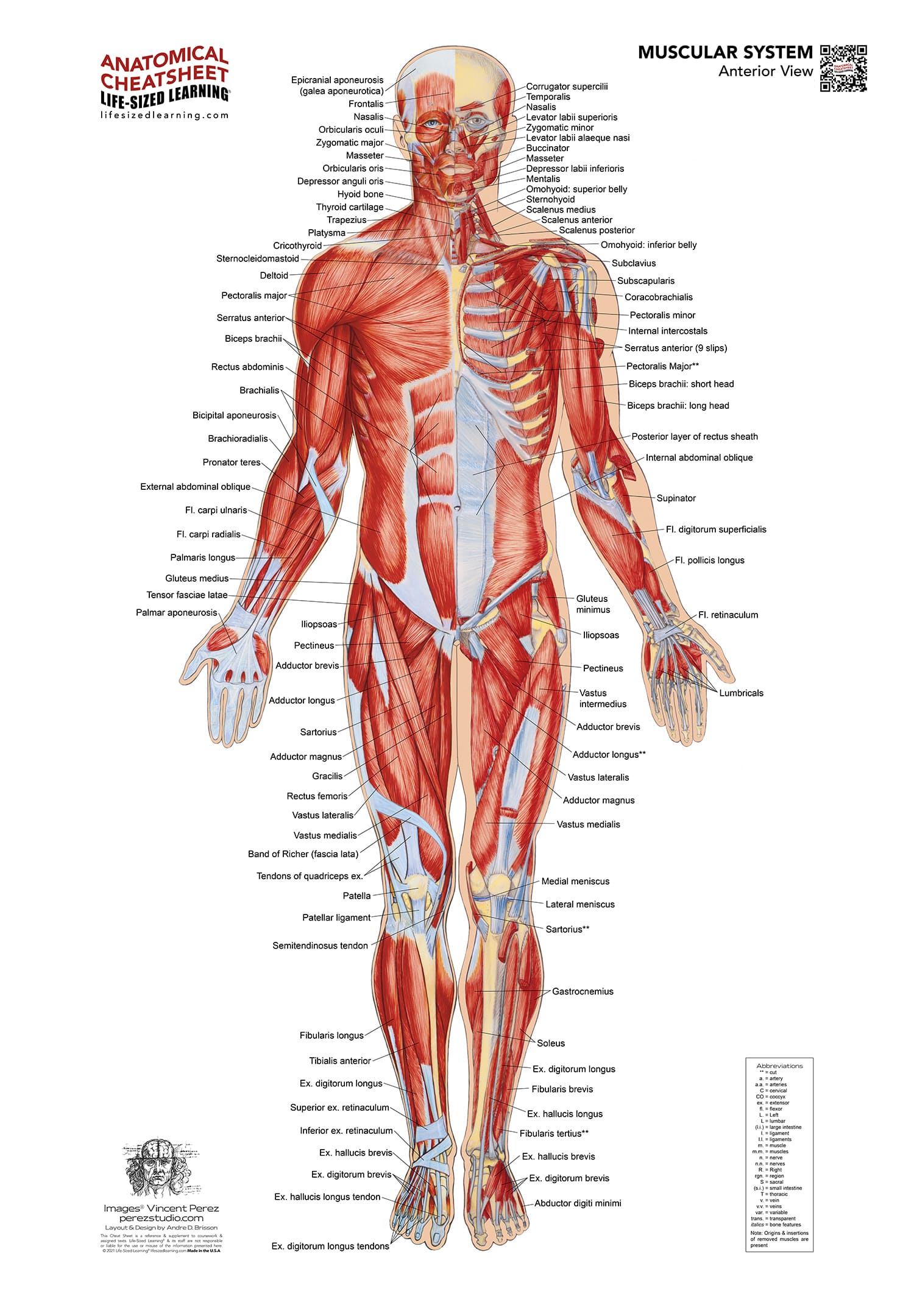
Muscular – Anterior
The muscular system is a network of muscles that work together to facilitate movement maintain posture. The anterior aspect of the muscular system includes the muscles of the front of the body, including the muscles of the face, neck, chest, abdomen, and upper and lower limbs. These muscles are responsible for bending, extending, flexing, and rotating the limbs and for breathing, speaking, and facial expressions.
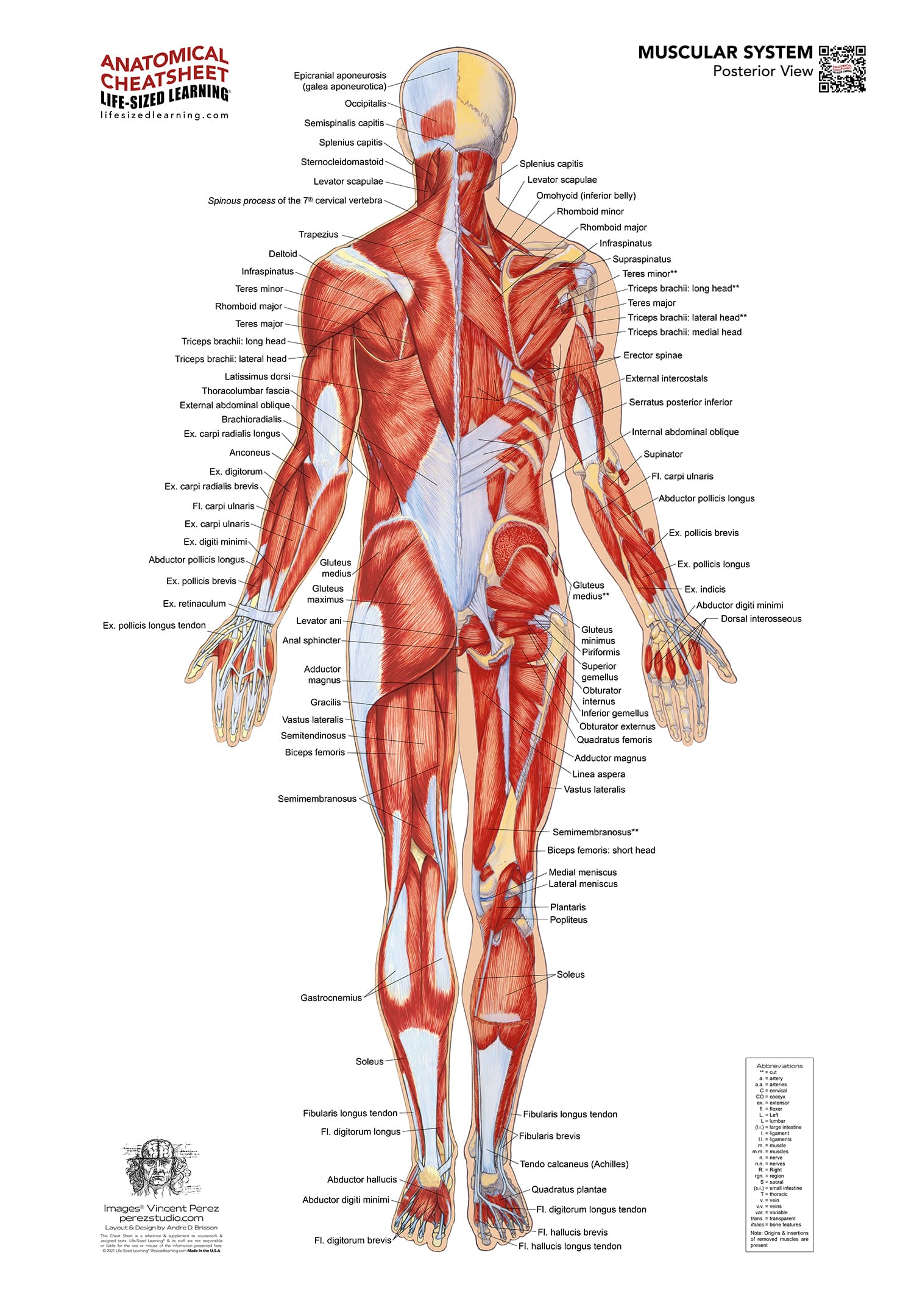
Muscular – Posterior
The muscular system is a network of muscles and tendons that work together to enable movement and provide structural support to the body. The posterior muscular system, also known as the back of the body, includes the muscles of the back, glutes, and legs. These muscles are responsible for various movements such as extension, abduction, and rotation. Some significant muscles in the posterior muscular system include the trapezius, erector spinae, gluteus maximus, and hamstrings. These muscles are essential for walking, running, and maintaining proper posture.
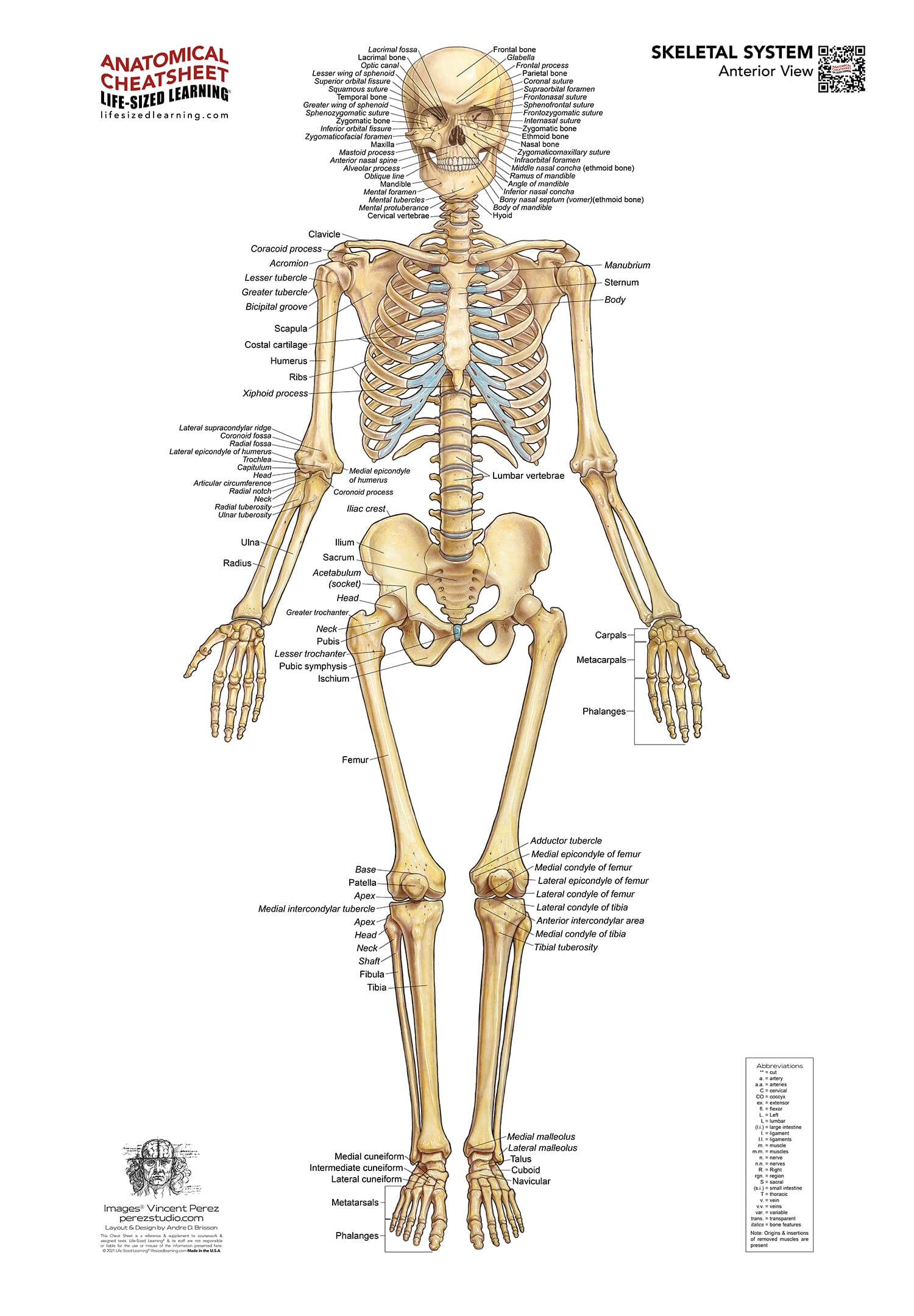
Skeletal – Anterior
The skeletal system is the framework of bones, cartilage, and other connective tissues that provide support and structure for the body. The anterior (or front) aspect of the skeletal system includes the bones and structures that make up the front of the body, such as the skull, clavicles, sternum, ribs, and the bones of the arms, wrists, and hands. These bones work together to protect vital organs like the brain, heart, and lungs and allow for movement and mobility in the upper body.
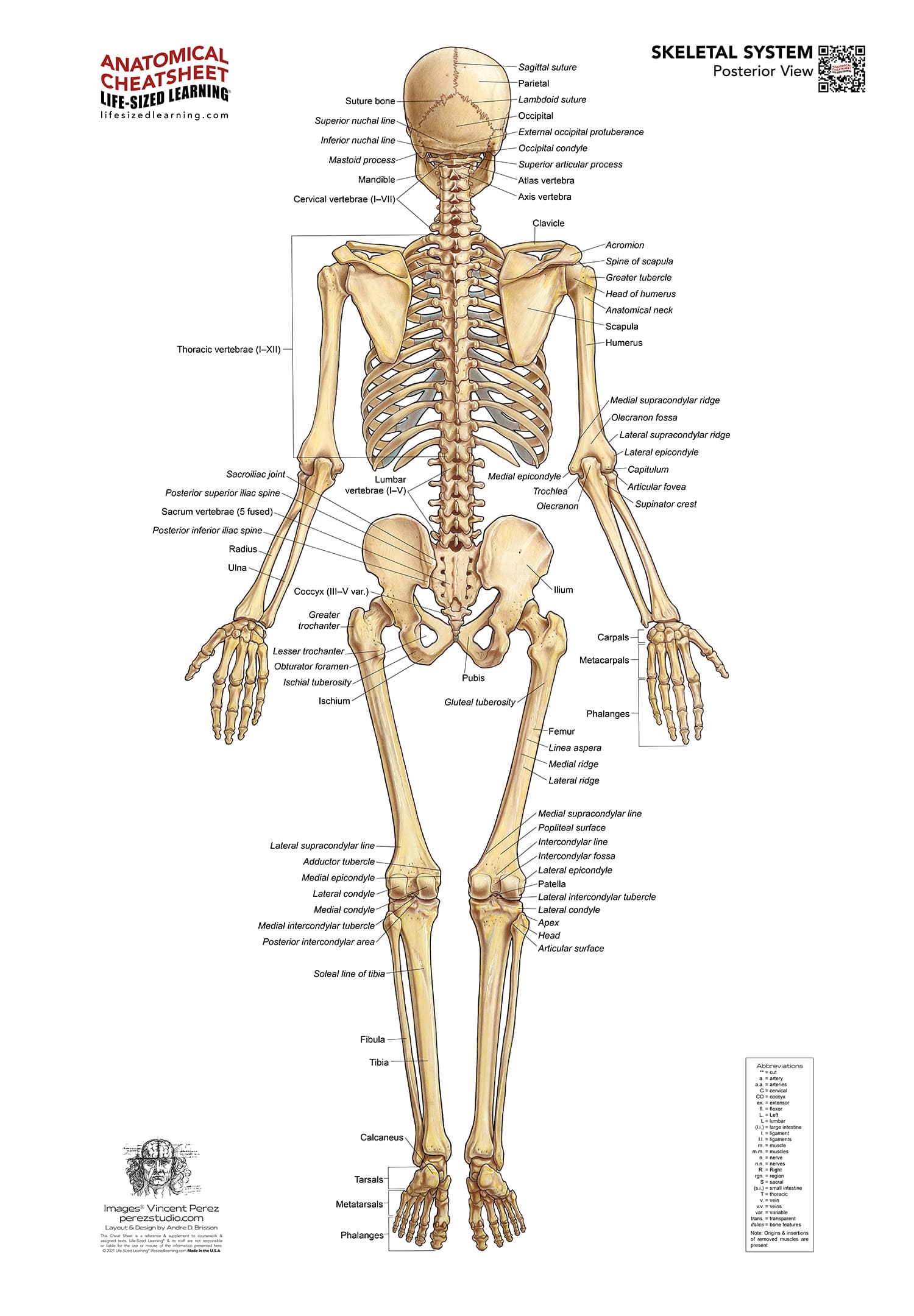
Skeletal – Posterior
The skeletal system is the framework of bones, cartilage, and other connective tissues that provide support and structure to the body. The posterior aspect of the skeletal system includes the backbones, including the vertebrae, ribs, and pelvic girdle. These bones form the structure that supports and protects the spinal cord and the vital organs in the thoracic and abdominal cavities.
The posterior skeletal system also plays a critical role in locomotion, providing attachment points for muscles and ligaments that allow trunk, limbs, and head movement. The posterior skeletal system is essential for producing blood cells and storing minerals such as calcium and phosphorus.
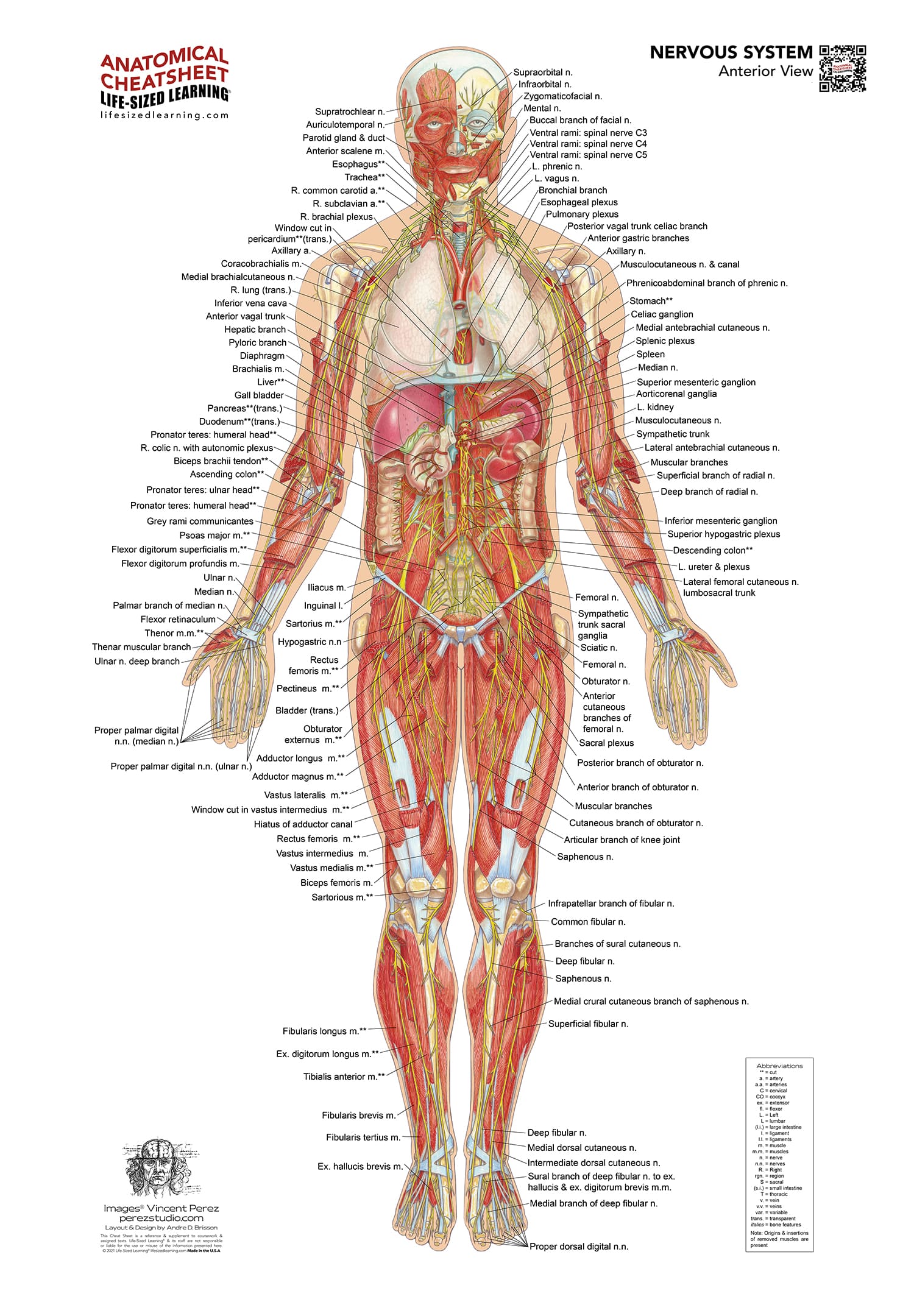
Nervous – Anterior
The nervous system is a complex network of cells and tissues that transmits signals between different body parts. The anterior (or front) aspect of the nervous system includes the brain and its associated structures, such as the frontal lobe, which is responsible for higher-level thinking and decision-making, and the olfactory bulb, which processes information related to smell. The optic nerves and optic chiasm, which transmit visual information from the eyes to the brain, are also located in the anterior aspect of the nervous system. In general, the anterior aspect of the nervous system is responsible for a range of functions related to perception, cognition, and motor control.
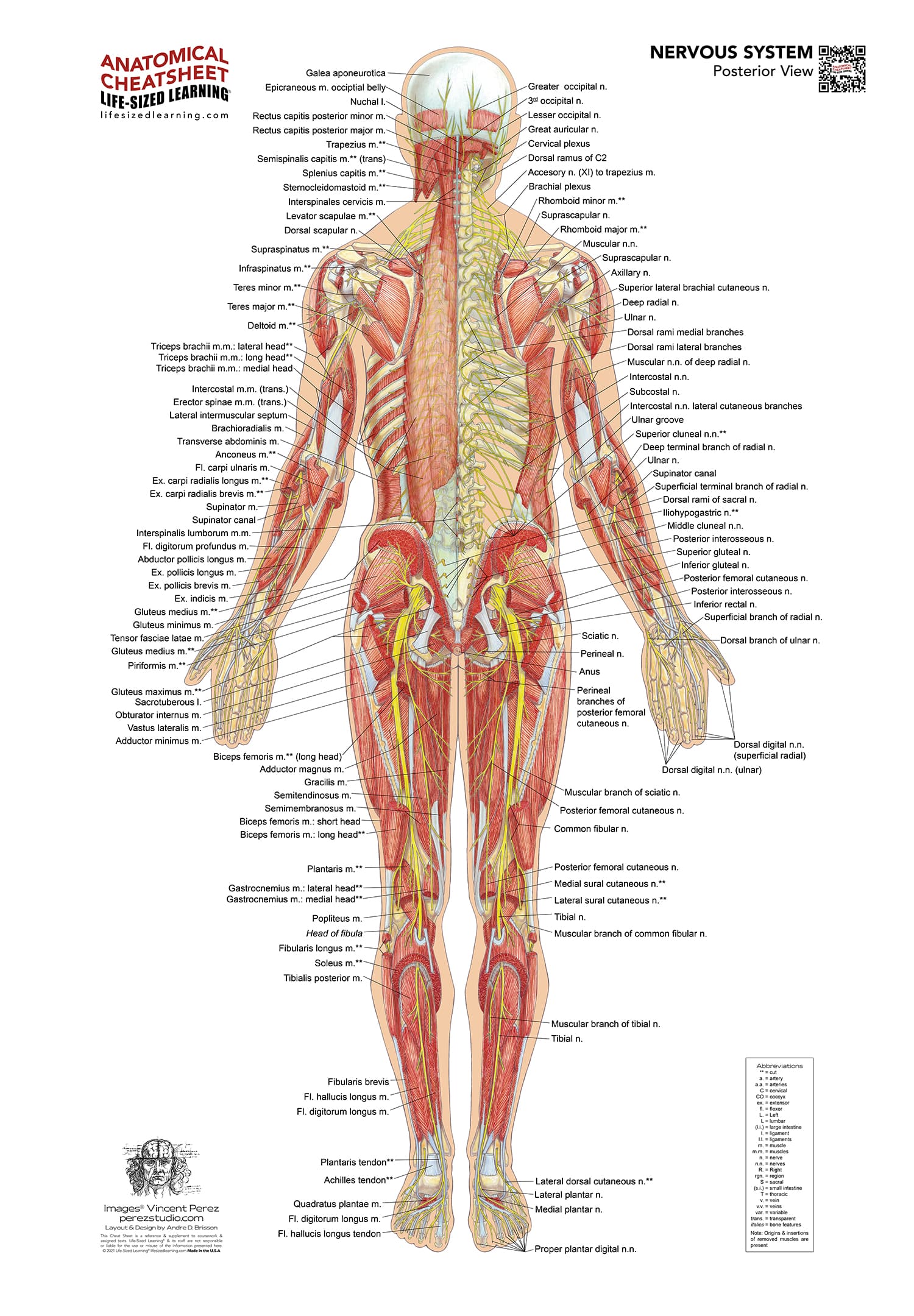
Nervous – Posterior
The nervous system is a complex network of cells and tissues that transmits signals between different parts of the body. The nervous system’s posterior (or back) aspect includes the spinal cord and the nerves branching from it. The spinal cord is a long, thin bundle of nerve fibers that extends from the base of the brain to the lower back, and it is responsible for transmitting signals to and from the brain and the rest of the body. The nerves that branch off from the spinal cord connect to muscles, organs, and other tissues throughout the body, allowing for the control of movement, sensation, and other bodily functions. In general, the posterior aspect of the nervous system is responsible for a range of functions related to sensation, movement, and reflexes.